
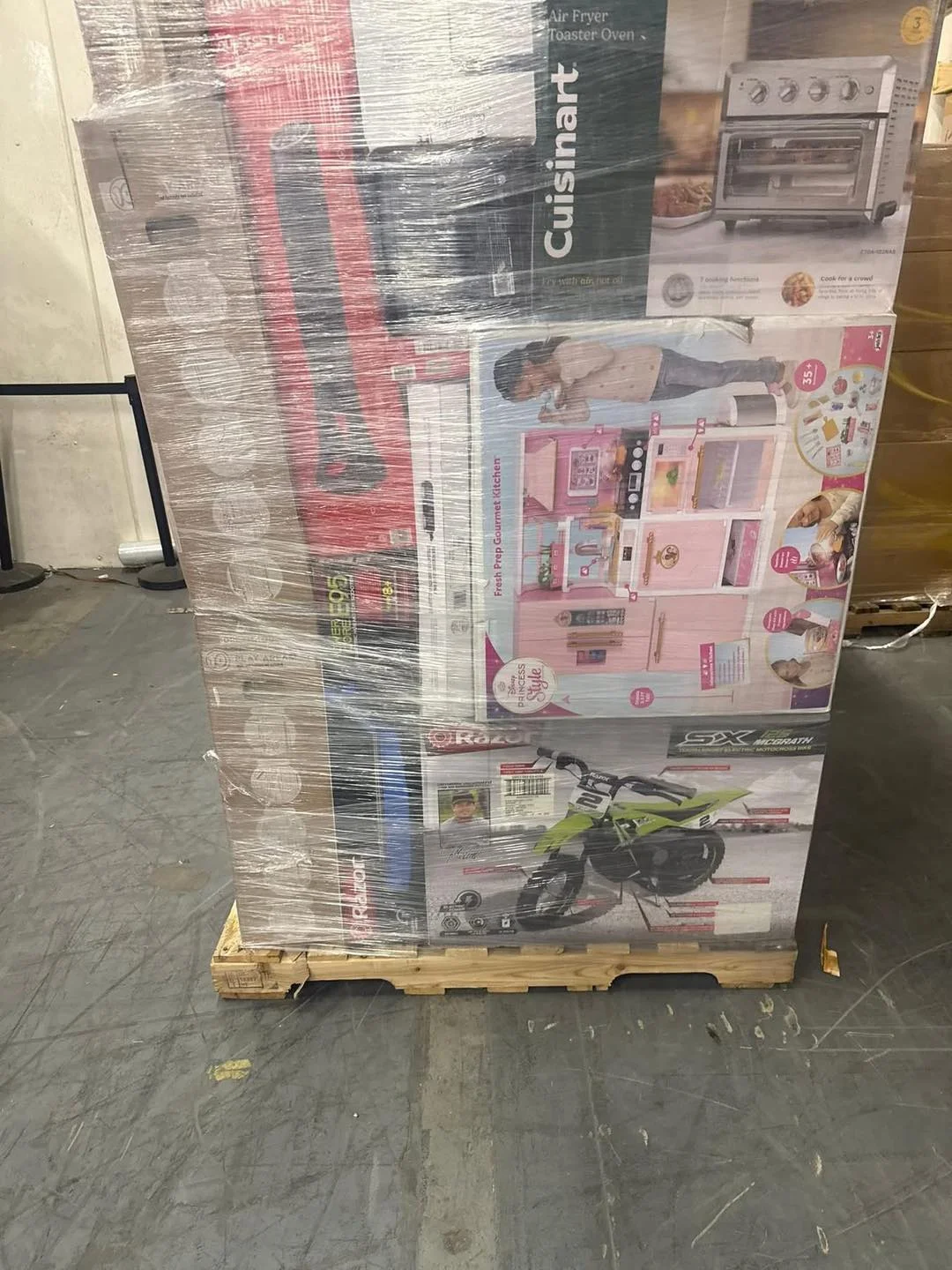
Amazon Returns for Sale: A Complete Guide to Buying Liquidation Inventory
Searching for amazon returns for sale can open up valuable opportunities for resellers, discount retailers, ecommerce businesses, bin stores, and entrepreneurs looking for inventory at competitive prices. Customer returns and surplus merchandise can enter the liquidation market through different channels, giving buyers access to products across categories such as electronics, home goods, tools, clothing, toys, appliances, and more.
However, buying liquidation inventory is different from purchasing brand-new retail merchandise. Products may be new, open-box, used, incomplete, or damaged depending on the specific lot. Successful buyers understand the condition, research the products, calculate their true costs, and choose inventory that fits their sales channels.
This guide explains how the market works, what to look for when buying Amazon returns, and how to approach liquidation inventory strategically.
What Are Amazon Returns for Sale?
Amazon returns for sale generally refers to merchandise that has been returned by customers and subsequently enters a secondary liquidation or resale channel.
A returned product can be in many different conditions. Some products may be unopened and appear essentially new, while others may have damaged packaging, missing accessories, cosmetic wear, or functional issues.
That is why buyers should never assume that every return pallet contains brand-new merchandise.
Common condition categories include:
- New and sealed
- Open box
- Customer return
- Tested
- Untested
- Damaged packaging
- Incomplete
- Salvage
The exact terminology varies between suppliers, so read the listing carefully before purchasing.
Why Buy Amazon Returns?
The primary attraction is the opportunity to acquire merchandise at a lower acquisition cost than traditional retail purchasing.
A reseller might purchase a pallet, sort the contents, test applicable products, and sell individual items through multiple channels.
Potential sales channels include:
- Ecommerce marketplaces
- Local marketplaces
- Social media
- Flea markets
- Discount stores
- Bin stores
- Independent websites
- Physical retail stores
The key is to purchase inventory based on realistic resale prices rather than advertised retail values alone.
Understanding Liquidation Sales
Liquidation sales can involve excess inventory, customer returns, discontinued products, shelf pulls, overstock, and other merchandise that businesses need to move through secondary channels.
For resellers, liquidation can provide access to inventory that would otherwise be difficult or expensive to acquire individually.
However, liquidation is not risk-free. Product condition can vary, and some items may require testing, cleaning, repackaging, or repair.
Pallet Suppliers
Choosing reliable pallet suppliers is one of the most important decisions when entering the liquidation market.
Before buying, investigate:
- Supplier history
- Business information
- Product descriptions
- Manifest availability
- Condition grading
- Shipping policies
- Return policies
- Payment methods
- Customer feedback
A transparent supplier should provide enough information for you to understand what you’re purchasing.
Be cautious about sellers making unrealistic claims about guaranteed profits or enormous retail values.
Wholesale Pallets and Bulk Inventory
Wholesale pallets allow buyers to purchase multiple products together rather than sourcing inventory individually.
This approach can be particularly useful for businesses that already have established sales channels.
When comparing wholesale pallets near me, local suppliers may provide an additional advantage because you could potentially inspect inventory or arrange warehouse pickup.
Local pickup may also reduce freight costs, although you should compare the total cost against shipped inventory from other suppliers.
Half Off Wholesale Opportunities
The phrase half off wholesale can be attractive to buyers, but don’t make a purchasing decision based on the discount percentage alone.
For example, a supplier may advertise merchandise as 50% below retail. That doesn’t necessarily mean you can resell every product for 50% below retail and still make a profit.
Instead, calculate:
Purchase price + freight + processing + selling fees + other expenses = total investment
Then compare that figure with realistic market prices.
Amazon Return Warehouses
An amazon return warehouse may refer to a facility where returned or surplus inventory is processed before being sold through secondary channels.
However, buyers should understand that independent liquidation warehouses and Amazon facilities are not necessarily the same thing.
If a business advertises Amazon returns, verify the supplier’s relationship to the inventory and understand the terms of sale.
Ask whether merchandise is:
- Manifested
- Tested
- Categorized
- Graded
- Sealed
- Untested
The more information you have, the easier it becomes to calculate potential value.
Amazon Mystery Boxes vs. Manifested Returns
Some buyers search for the best place to buy Amazon mystery boxes because the mystery-box format can be entertaining and potentially profitable.
A mystery box provides limited information about its exact contents. This creates more uncertainty than a manifested pallet.
A manifested lot typically gives you product information that can be researched before purchasing.
For commercial resellers, manifested inventory is often easier to evaluate because you can estimate demand and resale prices in advance.
Should Beginners Buy Mystery Inventory?
Mystery inventory can be appealing, but beginners should understand the additional risk.
If you don’t know what you’re buying, it becomes harder to calculate your expected return.
New resellers may benefit from starting with smaller, more transparent lots before moving into larger mystery purchases.
Electronics Returns and Liquidation
Electronics are among the most interesting categories in the liquidation market because individual products can have relatively high retail prices.
You may encounter:
- Smartphones
- Tablets
- Headphones
- Computer accessories
- Smart-home devices
- Gaming accessories
- Cameras
- Chargers
- Small electronics
Searches for mobile phone Amazon products often indicate strong consumer interest in smartphones and accessories, but electronics require careful evaluation.
A phone that looks perfect may still have a locked account, damaged battery, missing accessories, or other issues.
Never assume an electronic device is ready for resale simply because it powers on.
Electronic Pallets
An electronic pallet can contain multiple electronics products grouped together for liquidation.
The contents can range from accessories to higher-value devices.
Before purchasing, determine whether products have been tested.
For example, a pallet containing 50 tested accessories is fundamentally different from a pallet containing 50 untested customer returns.
Pallet Electronics
Pallet electronics can provide opportunities for resellers who have experience testing and listing technology products.
Electronics resellers should have a process for:
- Inspecting each item.
- Testing functionality.
- Checking accessories.
- Resetting applicable devices.
- Photographing products accurately.
- Recording condition.
- Listing products honestly.
This process reduces customer complaints and helps maintain a strong seller reputation.
Electronic Pallets for Sale
Businesses searching for electronic pallets for sale should compare lots carefully.
Look for information about:
- Brand
- Model
- Quantity
- Condition
- Accessories
- Testing status
- Manifest
- Purchase price
- Freight
A pallet with fewer high-quality products may be more profitable than a larger pallet filled with low-value accessories.
Electronic Liquidation
Electronic liquidation can be profitable for knowledgeable resellers, but it requires more product evaluation than many other categories.
Technology changes quickly, which means older products may lose value rapidly.
Research current market prices before purchasing.
Don’t base your resale estimates exclusively on original retail prices.
Liquidation Electronics and Electronics Liquidators
Liquidation electronics can include both consumer devices and accessories.
When working with electronics liquidators, ask how inventory is sourced and graded.
Important questions include:
- Are products tested?
- Are batteries included?
- Are products functional?
- Are chargers included?
- Are items locked to accounts?
- Are serial numbers available?
- Are products complete?
- Are returns accepted?
The answers can dramatically affect your potential resale value.
Electronic Liquidation Near Me
People searching for electronic liquidation near me may find local warehouses and liquidation businesses that specialize in technology products.
Local sourcing can allow buyers to inspect products before committing to a larger purchase.
If inspection is permitted, test representative samples and carefully review the supplier’s condition descriptions.
Buying Pallets Successfully
Buying pallets should be treated as an inventory investment rather than a simple bargain hunt.
Before making an order, calculate your expected landed cost.
For example:
- Pallet: $700
- Freight: $200
- Processing supplies: $50
- Testing/repair allowance: $50
Total investment: $1,000
If you have 80 sellable products, your average cost is approximately $12.50 per sellable item.
You can then compare this figure with realistic resale prices.
The Open Box Pallet Liquidation Market
The open box pallet liquidation category can offer products that have been opened but may remain fully functional.
Open-box inventory can be attractive because some products may have experienced little or no actual use.
However, inspect:
- Packaging
- Accessories
- Manuals
- Power cables
- Cosmetic condition
- Functional condition
An open box does not automatically mean a product is defective, but it does mean the buyer should verify its condition.
How to Maximize Your Resale Potential
The best liquidation businesses don’t simply buy cheaply. They build efficient systems for processing inventory.
After receiving a pallet:
Step 1: Photograph the shipment.
Document the pallet and packaging when it arrives.
Step 2: Create an inventory spreadsheet.
Record every product and its condition.
Step 3: Test applicable merchandise.
Especially electronics and mechanical products.
Step 4: Separate products by condition.
Keep new, open-box, used, incomplete, and damaged items separate.
Step 5: Research prices.
Look at current marketplace listings and completed sales where available.
Step 6: List accurately.
Use honest descriptions and photographs.
Step 7: Track profitability.
Record revenue, fees, shipping, refunds, and other expenses.
This creates a repeatable process that can be scaled.
Final Thoughts
The market for amazon returns for sale provides interesting opportunities for businesses willing to understand liquidation inventory and manage the associated risks.
Whether you’re researching pallet suppliers, wholesale pallets, wholesale pallets near me, Amazon return inventory, or electronic pallets for sale, the same principle applies: evaluate the actual merchandise and calculate the complete cost before purchasing.
Electronics can offer attractive resale opportunities, but they require testing and careful condition assessment. Similarly, open-box and customer-return inventory can contain valuable products, but condition is never guaranteed unless the supplier explicitly provides that assurance.
For beginners, start small. Learn how manifests work, understand your marketplace fees, develop a product-testing process, and track your actual margins.
The goal isn’t simply to find the cheapest pallet. The goal is to find inventory that you can process efficiently, sell responsibly, and turn into a sustainable profit.
With disciplined sourcing, accurate valuation, and careful inventory management, Amazon return liquidation can become a practical source of merchandise for resellers, ecommerce businesses, discount retailers, and wholesale operators.
Reviews
There are no reviews yet.